Why Does Turkey Not Change?
 16 December 2025
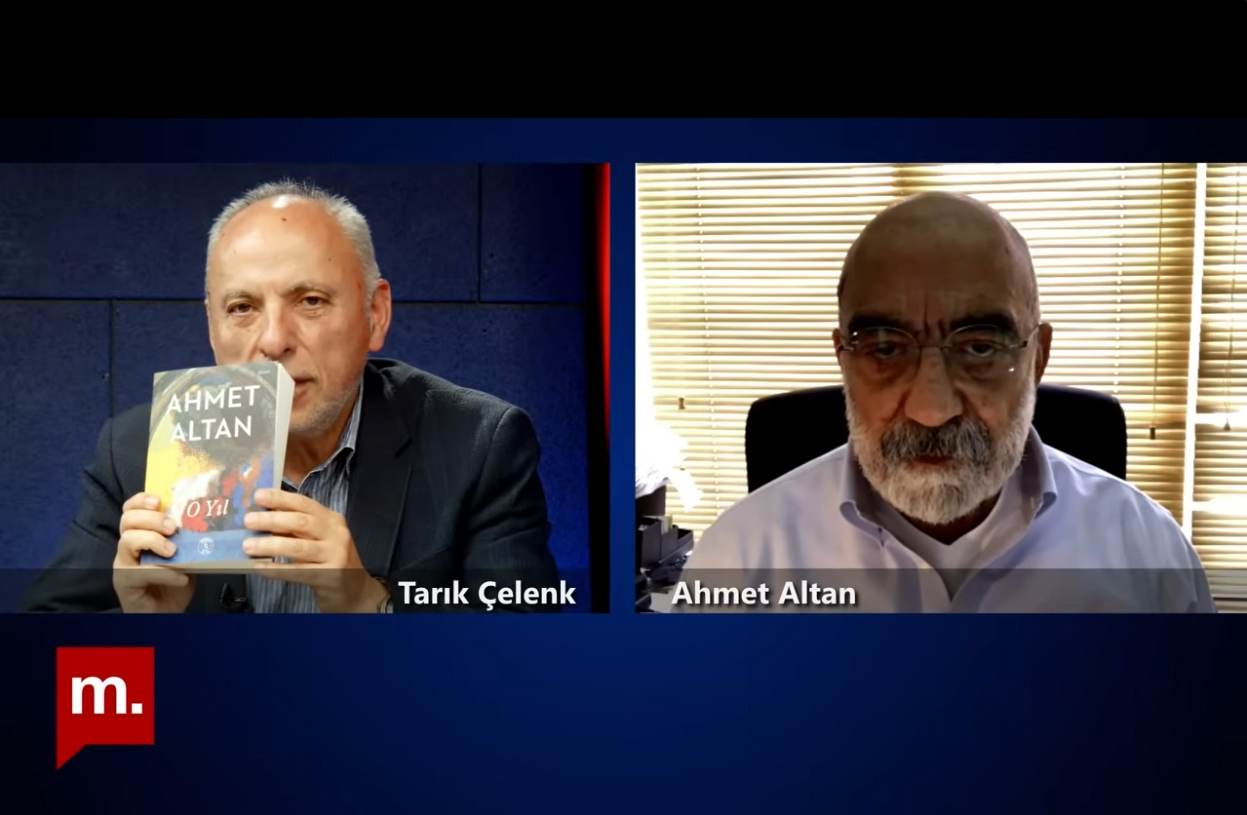
The recent publication of Ahmet Altan’s latest novel, "O Yıl" (That Year), alongside his interview with Arık Çelenk on Medyascope, marks a renewed and unequivocal public engagement with the legacy of the Armenian Genocide of 1915 and structural reasons for Turkey’s persistent inability to confront its past.
1915 as a State Crime
In his interview on Medyascope, Altan reflects on the historical background to his novel and describes the mass murder of Armenians in the Ottoman Empire in 1915 as a state crime. He emphasises that the Armenians murdered were neither enemies nor foreigners, but Ottoman citizens killed by their own government. He rejects attempts to justify the massacres through abstract notions such as "state interests”, "homeland”, or "necessity”, arguing that such concepts have repeatedly been used to legitimise mass violence while shielding perpetrators from accountability. He condemns the continued glorification of figures such as Talat Pasha, whom he identifies as bearing responsibility for what he calls a "great sin” that permanently stained Ottoman and Turkish history.
Challenging the Architecture of Denial
Altan’s intervention is particularly significant in the Turkish public sphere because he not only names the crime, but also challenges the moral architecture of denial. He points out that Ottoman officials who opposed the deportations and killings were dismissed and silenced, and that contemporary Turkish education and public memory continue to honour perpetrators while erasing dissenters. In doing so, Altan underscores a central insight long emphasised by genocide scholars: denial is not a passive absence of memory, but an active, institutionalised process.
Distinction and Responsibility
At the same time, Altan draws a careful distinction between Mustafa Kemal Ataturk and the Unionist leadership responsible for the genocide, noting that Ataturk neither participated in the crime nor endorsed it, and that he publicly condemned the massacres. This distinction, however, does not absolve the Republic of Turkey of responsibility for its long-standing failure to confront the crime or for perpetuating Unionist modes of governance—particularly the reliance on force, repression, and the sacralisation of the state.
Why Does Turkey Not Change?
Altan’s central question—"Why does Turkey not change?”—resonates deeply with many critical sections of Turkish society. His answer is stark: Turkey has never fully confronted its foundational violence, never established the primacy of law over state power, and never replaced propaganda with historical truth. The Armenian Genocide remains the clearest and most consequential manifestation of this unresolved past.
The Importance of Speaking Truth
Ahmet Altan's voice is an important contribution to public discourse in Turkey. His insistence on naming the Armenian Genocide, condemning its perpetrators, and rejecting denial represents a necessary step towards historical reckoning and catharsis. While literary and intellectual interventions alone cannot bring truth, they play a vital role in breaking silences and creating space for truth.
Truth as the Basis for Renewal
What does all of this mean for Turks and the descendants of the Armenian Genocide? Genuine reconciliation, democratic development, and moral renewal in Turkey are impossible without an honest confrontation with the Armenian Genocide. Altan’s work and words serve as a reminder that meaningful change begins not with forgetting or distortion, but with truth and reconciliation. « Back